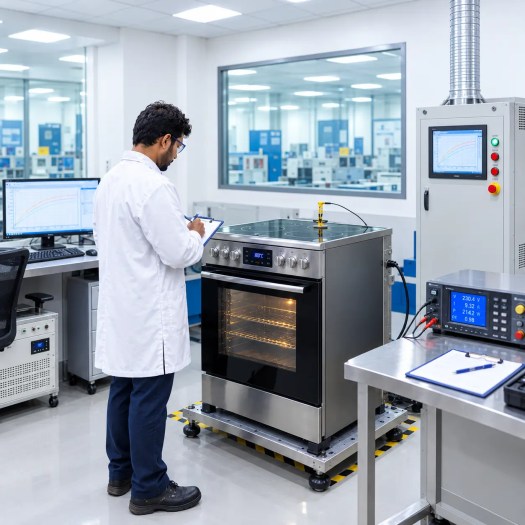
Electrical Heat Pump Testing & Certification

What is an Electrical Heat Pump?

An electrical heat pump is an advanced heating, cooling, and climate control appliance designed to transfer heat from a low-temperature source (such as outside air, water, or the ground) to an indoor space or vice versa. Depending on its configuration, it utilizes compressors, refrigerant circuits, expansion valves, heat exchangers, fans, electrical heating elements, and electronic control boards to regulate indoor temperatures efficiently. Electrical heat pumps are widely used for residential, commercial, and industrial HVAC applications and must be fully suitable for their rated electrical characteristics, refrigerant classifications, and intended operating environments.

Electrical Heat Pump Testing 2

Why Must Electrical Heat Pumps Be Evaluated Before Entering the Market?

Electrical heat pumps must be rigorously evaluated before entering the market to verify electrical safety, thermal performance, mechanical construction, refrigerant safety, and compliance with applicable international standards. Proper testing helps identify critical hazards such as electric shock, compressor overheating, refrigerant leaks, fire risks, and electrical component failure, ensuring the appliance operates safely under normal and relevant abnormal conditions.

• Consumer Safety: Assessing protection against electric shock, contact with hazardous live parts, and safeguards associated with pressurized refrigerant systems.

• Electrical Reliability: Checking the compressor motor, internal wiring, switching devices, capacitors, terminals, and protective electronic controls for safe, continuous operation.

• Fire & Thermal Safety: Evaluating temperature rise under heavy loads, thermal cut-outs, and fire risks associated with electrical heating components and high-pressure refrigeration cycles.

• Mechanical & Pressure Safety: Checking enclosure strength, structural stability, guards, vibration resistance, and safety under operating pressures.

• Functional Performance: Verifying that the heat pump cycles, defrost mechanisms, and automated controls operate as intended under specified environmental conditions.

• Regulatory Compliance: Supporting conformity with applicable safety, energy efficiency, and technical requirements for the UAE, GCC, and other target international markets.

Ensuring Quality and Compliance for Electrical Heat Pumps in the UAE

Electrical heat pumps are heavily utilized across modern residential villas, commercial towers, industrial facilities, and district cooling auxiliary systems. Across Dubai, Abu Dhabi, and the wider UAE, comprehensive product evaluation helps verify that these systems are engineered for safe, reliable operation under extreme ambient temperatures, high humidity, and demanding electrical grids.

Before manufacturers, suppliers, or importers introduce electrical heat pumps to the market, they must demonstrate compliance with strict safety and technical standards. Professional testing helps assess electrical insulation, temperature rise limits, abnormal operating endurance, mechanical construction, and relevant thermal risks.

Electrical Heat Pump Testing

This is where an accredited testing and certification partner such as METS Laboratories LLC can fully support your product evaluation, technical compliance documentation, and seamless market-entry activities.

Understanding the Core Standard: IEC 60335-2-40 Testing

IEC 60335-2-40 specifies particular safety requirements for electrical heat pumps, air-conditioners, and dehumidifiers. It is used in conjunction with IEC 60335-1, which covers general safety requirements for household and similar electrical appliances. The applicable evaluation depends on the appliance type, construction, cooling/heating capacity, refrigerant type, and intended installation environment.

The relevant test procedures are selected according to the product design and the specific clauses of the standard. The following outlines major safety evaluations that are typically performed; the final test plan is customized against the complete applicable standard requirements.

Major safety tests and evaluations include:

1. Electrical Safety

  • • Protection Against Electric Shock: Checking accessibility to live parts and verifying appropriate enclosure degrees of protection (IP ratings).

• Insulation Resistance and Electric Strength: Assessing dielectric withstand and electrical insulation integrity under operational stress.

• Leakage Current: Measuring leakage current limits under specified operating and temperature conditions.

• Power Input and Current: Verifying that actual electrical input and current draw align with rated appliance specifications.

2. Heating and Thermal Safety

• Temperature Rise: Measuring winding temperatures of compressors, motors, accessible surfaces, and internal components during maximum load operation.

• Abnormal Operation: Evaluating appliance safety under simulated fault conditions, locked-rotor tests, restricted airflow, and control failures.

• Overheating Protection: Checking the functional reliability of internal thermal cut-outs, overload protectors, and pressure relief safeguards.

3. Fire, Mechanical, and Pressure Safety

• Resistance to Heat and Fire: Assessing non-metallic enclosures, internal wiring insulation, and electrical components against abnormal heat and ignition sources.

• Mechanical Strength and Stability: Checking structural enclosure robustness, vibration endurance, and resistance to external impacts.

  • • Construction & Pressure Containment: Evaluating the safety of refrigerant tubing, joints, and protective guards against mechanical damage and high-pressure stress.

4. Controls and Functional Safety

• Thermostats and Switching Controls: Checking temperature controllers, relays, pressure switches, and electronic safety circuits for reliable operation.

• Protective Electronic Circuits: Evaluating software-controlled safety functions and protective devices under specified fault conditions.

5. Endurance and Reliability

• Operating Performance: Monitoring heat pump cycling, defrost performance, and steady-state operation during extended test runs.

• Component Durability: Assessing terminal connections, capacitors, and internal wiring harnesses for long-term reliability.

6. Marking and Instructions

• Product Marking: Verifying electrical ratings, refrigerant type/charge warnings, manufacturer identification, and safety pictograms.

• Instructions: Reviewing installation guidelines, user manuals, maintenance protocols, and safety warnings supplied with the equipment.

Why Choose METS Laboratories LLC?

Electrical heat pump safety evaluation requires specialized testing facilities, advanced instrumentation, deep technical expertise, and up-to-date knowledge of international standards. METS Laboratories LLC supports manufacturers, suppliers, and importers in navigating complex regulatory landscapes and verifying ultimate product safety and conformity.

• Heat Pump Testing Support: We provide end-to-end evaluation of electrical safety, thermal performance, abnormal operating conditions, and electronic control protections

• Testing Against IEC 60335-2-40: Our technical assessment approach integrates specific heat pump requirements with the general safety principles of IEC 60335-1.

• Testing and Compliance Support: We assist with sample pre-checks, testing coordination, technical file preparation, and conformity verification to streamline market access across the UAE, GCC, Middle East, and global markets.

• Reliable Evaluation: Rigorous third-party testing helps identify potential non-conformities early, enabling manufacturers to optimize product design and build market confidence prior to commercial launch.

Comprehensive testing solutions that enhance
safety, quality, and market acceptance.