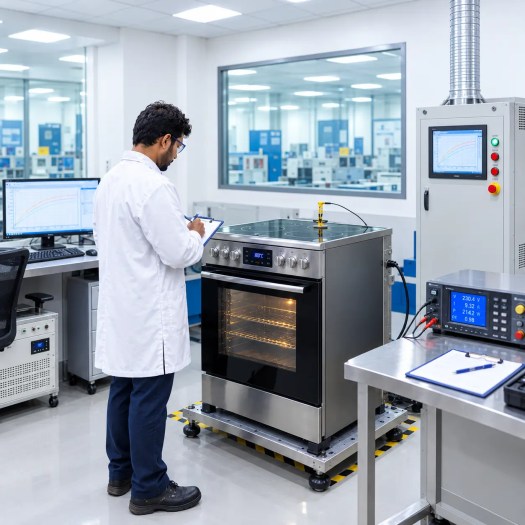
LED Control Gear Testing & Certification (IEC 61347-2-13)
What is LED Control Gear?
LED control gear consists of electronic power supply units—such as LED drivers, power supplies, and control modules—specifically designed to operate LED modules and light sources. They convert input power (such as mains voltage) into a regulated, constant current or constant voltage required by LED lighting systems in commercial, industrial, and residential installations.
Why Must LED Control Gear Be Safety Tested or Evaluated Before Entering the Market?
LED control gear must undergo rigorous safety testing and evaluation before entering the market to protect end-users and installations from severe electric shocks, internal component overheating, short circuits, and electrical fires. Because these devices operate continuously, handle high internal voltages, and manage thermal loads in diverse environments, verification is critical to prevent hazardous failures.
• Electric Shock and Short-Circuit Prevention: LED control gear handles mains voltages while delivering power to low-voltage LED loads. Inadequate internal insulation, faulty grounding, or poor terminal separation can lead to severe electrical shocks or short circuits. Safety testing verifies dielectric strength and insulation resistance.
• Thermal Endurance and Overload Control: Continuous operation generates substantial internal heat within electronic components and transformers. Defective thermal cut-offs, poor component spacing, or inadequate heat dissipation can lead to component burnout or internal fires. Thermal endurance and abnormal operation tests simulate heavy-load jams and fault conditions.
• Leakage Current and Dielectric Integrity: High-frequency switching and internal component degradation can increase leakage currents over time. Safety testing ensures current leakage remains below safe thresholds and that insulation holds up against transient overvoltages.
• Electromagnetic Compatibility (EMC): LED control gear must not emit excessive electromagnetic interference that disrupts other sensitive electronic systems, nor should they malfunction when exposed to standard environmental electrical noise found in commercial or industrial settings.
• Regulatory Compliance and Market Access: Global regulatory authorities (such as GSO in the GCC, CE in Europe, or equivalent international bodies) legally mandate third-party testing reports from an ISO/IEC 17025-accredited laboratory.
The Benchmark Standard: IEC 61347-2-13 for LED Control Gear Safety
IEC 61347-2-13 is the international safety standard that specifies particular safety requirements for electronic control gear for use on d.c. or a.c. supplies up to 1000V associated with LED modules. For LED drivers and power supplies, this standard defines the baseline requirements for electrical insulation, mechanical construction, thermal endurance, fault protection, and fire resistance.
Core Testing Parameters Under IEC 61347-2-13
Evaluating LED control gear through a certified testing lab involves subjecting the device to a series of rigorous mechanical and electrical stress tests outlined within the standard:
1. Classification & Marking Tests
• Protection Against Electric Shock: Verifies proper classification (such as Class I, Class II, or Independent/Built-in control gear).
• Ingress Protection (IP Rating): Ensures the enclosure provides adequate protection against dust and moisture ingress depending on its intended installation environment.
• Durability of Markings: Rating plates, electrical parameters, and terminal designations are tested for legibility (rubbed with water and petroleum spirit) to ensure safety instructions do not wear off.
2. Protection Against Access to Live Parts
• Standard test probes are applied to ventilation slots, terminal blocks, and cable entries to ensure operators and installers cannot inadvertently touch bare live components or internal high-voltage terminals.
3. Heating and Normal Load Operation
• Normal Load Operation: The control gear is run under maximum rated load conditions to measure temperature rises across internal components.
- • Winding and Component Temperature Limits: Transformers, inductors, printed circuit boards (PCBs), and enclosure walls are monitored via thermocouples to ensure temperatures do not exceed strict thermal limits that could degrade insulation and trigger a fire hazard.
4. Fault Conditions and Abnormal Operation
• Short-Circuit and Overload Protection: Evaluates the response of the control gear when output terminals are shorted or overloaded, ensuring internal components do not catch fire, emit molten material, or exceed safe operating limits.
• Component Failure Simulation: Simulates single-fault conditions within electronic circuits to verify that safety barriers remain intact.
5. Leakage Current and Electric Strength (Dielectric/Hi-Pot Test)
• Leakage Current: Measured under operating temperature to ensure current leaking to accessible metal parts remains below safe thresholds.
• Electric Strength: High voltage (ranging from 1500V to 3000V+ depending on insulation type and working voltage) is applied between live parts and accessible surfaces or output terminals to verify insulation breakdown resistance.
6. Creepage Distances and Clearances
• Measuring physical gaps (clearances) and surface distances (creepage) across printed circuit boards and internal transformer windings to prevent arcing, tracking, and short circuits under humid or dusty conditions.
7. Screw Terminals and Connections
• Mechanical tests verify that terminal blocks, screw connections, and strain reliefs can withstand the physical torque and stress of wiring during installation without loosening or damaging conductors.
Why Choose METS Laboratory LLC as Your LED Control Gear Testing Lab?
Manufacturers expanding their footprint require localized, accredited support. As an established testing lab in Abu Dhabi/Dubai/UAE, METS Laboratory LLC bridges the gap between regional compliance and global market demands.
• ISO/IEC 17025 Accreditation: Our testing protocols are internationally recognized, ensuring your technical documentation is accepted worldwide.
• Specialized IEC 61347 Competence: We provide dedicated testing for lighting controls and electronic power supplies, covering specific clauses for LED control gear under international safety standards.
• End-to-End Testing & Certification: From initial sample evaluation and performance testing to final certification support, our team streamlines your compliance journey.
• Global Recognition: As an ISO/IEC 17025 accredited laboratory (by GAC & QAI), METS issues reports that carry weight globally, bridging local compliance with acceptance across international markets.